The five biggest money-wasting mistakes when buying a TV in Australia are: trusting the in-store demo (every display TV runs in “vivid mode” that looks nothing like your lounge room), paying AU$150–$400 for extended warranties you don't need (Australian Consumer Law already covers you for 4–6 years on an expensive TV — and CHOICE found 71% of stores misrepresent this), choosing the wrong screen size for your viewing distance, ignoring HDMI 2.1 and panel technology differences that actually matter for gaming and movies, and buying last year's model at full price outside sale periods when EOFY and Black Friday discounts of 20–35% are routine. The average Aussie household spends AU$1,200–$2,500 on a TV and keeps it 6–8 years — we spent two weeks comparing every model under $2,500 at JB Hi-Fi, Harvey Norman, and The Good Guys so you don't have to learn these lessons the expensive way.
Why Does the TV Look Different at Home Than in the Store?
Every TV in JB Hi-Fi and Harvey Norman is running in “demo mode” or “vivid mode” — a display setting that cranks brightness, colour saturation, and sharpness to maximum. It looks spectacular under the fluorescent lights of a retail store. It looks absolutely terrible in your lounge room.
CHOICE Australia's TV expert Denis Gallagher puts it bluntly: at home, unless you're watching the JB demo reel on repeat, you'll quickly tire of the over-saturated, unrealistic colours. When CHOICE mystery-shopped 80 stores across Australia, they found most demo TVs were running settings that no one would actually use at home.
What to Do Instead
Ask the salesperson to switch the TV to “Movie” or “Filmmaker Mode” and play regular YouTube content — not the 4K HDR demo reel. Watch standard definition free-to-air footage too. A TV's ability to upscale low-res content is often the real difference between a good TV and a bad one. Many cheap TVs look great with 4K content but awful with regular TV.
Do You Actually Need Extended Warranty on a TV in Australia?
This is the biggest rip-off in Australian retail. When CHOICE mystery-shopped 80 Harvey Norman, JB Hi-Fi, and The Good Guys stores, 71% misrepresented your consumer rights when selling extended warranties. 73 out of 80 salespeople pushed extended warranty before even mentioning your existing rights.
Here's what they don't want you to know: under Australian Consumer Law, if you buy an expensive TV and it breaks through no fault of your own within a “reasonable” period, the retailer must repair, replace, or refund it — regardless of whether the manufacturer's warranty has expired. For a AU$2,000 TV, “reasonable” is generally considered to be 4–6 years by consumer advocacy groups.
Do I Need Extended Warranty on a TV in Australia?
No. Under Australian Consumer Law (Schedule 2 of the Competition and Consumer Act 2010), retailers must repair, replace, or refund faulty goods within a “reasonable” period — which consumer advocacy groups consider 4–6 years for a AU$2,000 TV. This protection applies automatically regardless of the manufacturer's warranty period. A 2023 CHOICE investigation found that 71% of electronics stores misrepresented consumer guarantee rights when selling extended warranties, with 73 out of 80 salespeople pushing paid cover before mentioning existing legal protections. Extended warranties on TVs typically cost AU$150–$400 and largely duplicate the free coverage you already have under law. We reckon that money is better spent on a decent soundbar. If your TV fails within a reasonable timeframe, contact the retailer directly and cite your consumer guarantee rights — the ACCC has enforcement guidelines that back you up.
Don't Pay For This
A typical extended warranty on a AU$1,500 TV costs AU$150–$300. That money is almost always wasted because Australian Consumer Law already gives you stronger protection — for free. If your TV fails after 3 years, you have a right to a remedy regardless of extended warranty. Save that AU$200 and put it toward a better soundbar.
Mistake #3: Getting the Size Wrong
“Should I get 55 or 65 inch?” is the wrong question. The right question is: “How far am I sitting from the TV?” Here's the viewing distance guide that most salespeople won't bring up (because they'd rather upsell you to the bigger screen):
| Viewing Distance | Recommended Size | Common Room |
|---|---|---|
| 1.5–2.0 metres | 43–50 inch | Bedroom, study |
| 2.0–2.7 metres | 55–65 inch | Most Aussie lounges |
| 2.7–3.5 metres | 65–75 inch | Large living room |
| 3.5+ metres | 75–85 inch | Home cinema, rumpus |
* Based on 4K resolution. At 4K, you can sit closer without seeing pixels. For the typical Aussie lounge (couch 2.5m from wall), 65 inch is the sweet spot.
The most common mistake: buying a 55-inch TV when your couch is 2.5 metres away. At that distance, a 65-inch screen gives you a much more immersive experience and is the size recommended by most AV experts. The price difference between 55" and 65" is often only AU$200–$400 — worth it for something you'll use every day for years.
Mistake #4: Not Understanding OLED vs QLED vs Mini LED
The TV market in 2026 has three main display technologies. Each has genuine strengths and weaknesses, but salespeople tend to push whichever brand pays the best margin. Here's the honest breakdown:
| Technology | OLED | Mini LED / QLED | Standard LED |
|---|---|---|---|
| Black levels | Perfect (pixels off) | Very good | Average |
| Brightness | Good (improving) | Excellent | Good |
| Bright room? | Reflections | Great | Fine |
| Dark room / movies | Unbeatable | Good (some blooming) | Grey-ish blacks |
| Gaming (120Hz+) | Best response | Great | Usually 60Hz |
| 65" price range (AU$) | AU$2,000–$5,000 | AU$1,000–$3,500 | AU$500–$1,200 |
| Key brands | LG, Samsung, Sony | Samsung, Hisense, TCL | Hisense, TCL, Kogan |
The Quick Decision
Bright living room + daytime sport? — Mini LED / QLED (Hisense U8, Samsung QN90F)
Dark room + movies + gaming? — OLED (LG C5, Samsung S95F)
Tight budget + casual watching? — Budget Mini LED (TCL C7K, Hisense U7)
Don't care about tech specs? — Walk into JB, say “65 inch, under AU$1,500” and buy the Hisense U7.
Mistake #5: Ignoring the Sound (Then Overpaying for a Soundbar)
Modern TVs are incredibly thin — which means terrible speakers. CHOICE has tested TVs that sound worse than a transistor radio. Most Aussies watch for a week, realise they can barely hear dialogue, and rush back to buy a soundbar that costs another AU$300–$800.
The smarter approach: budget for sound from the start. If your total budget is AU$2,000, consider spending AU$1,500 on the TV and AU$500 on a decent soundbar. A mid-range TV with a good soundbar will give you a better overall experience than a flagship TV with its built-in speakers.
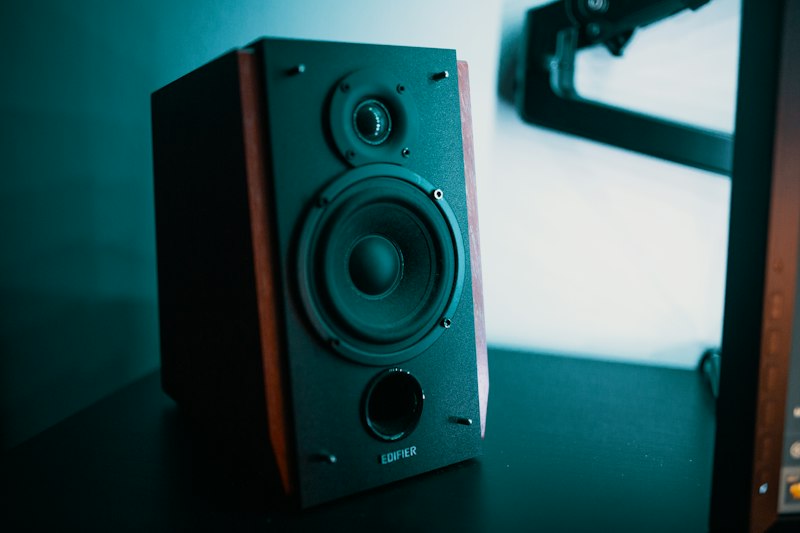
Soundbar Picks by Budget (AU$)
What We'd Actually Buy in 2026
Based on current Australian pricing, here's what we recommend at each budget tier — factoring in picture quality, sound, smart features, and long-term value.
Hisense U7 Series (65")
Mini LED, 165Hz gaming, four HDMI 2.1 ports, Google TV, and a solar-powered remote. Bright enough for sunny Aussie living rooms, with solid HDR performance. The U7 is the most-recommended budget TV by Australian tech reviewers in 2026. At JB Hi-Fi and The Good Guys.
Hisense U8 Series (65")
Flagship-level brightness (3,300+ nits in testing), Mini LED with outstanding backlight control, and all the gaming features you'd expect. The U8 delivers performance that rivals TVs costing twice as much. If your budget is AU$2,000, this is the one.
LG C5 OLED (65")
The LG C-series has been the go-to OLED for five years running. Perfect blacks, superb colour accuracy, excellent webOS smart platform, and every gaming feature in the book (4K 120Hz, VRR, ALLM, Dolby Vision gaming). The C5 is the sweet spot between the budget B5 and the premium G5.
TCL C7K (65")
QD-Mini LED at a price that seems like a typo. 144Hz gaming, Dolby Vision, AMD FreeSync Premium Pro, and surprisingly refined picture quality for the price. TCL has been the quiet achiever of the Aussie TV market. At JB Hi-Fi and Harvey Norman.
The Aussie TV Buyer's Cheat Sheet
How to Get the Best Deal
- 1. Buy at the end of financial year (June–July) or during Black Friday — TV discounts of 20–35% are common as retailers clear older models
- 2. Use StaticICE.com.au to compare prices across all Australian retailers instantly
- 3. Price match at Officeworks (they beat by 5%) or The Good Guys
- 4. Never pay for extended warranty — Australian Consumer Law has you covered
- 5. Always ask to see the TV in “Movie mode” before buying, not demo/vivid mode
- 6. Budget 25% of your total spend for sound (soundbar or speakers)
- 7. Check RTINGS.com for independent, lab-tested reviews — they don't accept free samples
Honestly, the Aussie TV market in 2026 is ridiculously competitive. We reckon Hisense and TCL have genuinely closed the gap with the big names — especially in the $1,000–$2,000 range where most of us actually shop. You don't need to spend $3,000+ to get a great TV.
One last thing: measure your room before you walk into the shop. Seriously. We've seen mates drop $2,500 on a 75-inch that overwhelms their lounge. The salesperson's job is to sell you the most expensive TV on the floor. Your job is to buy the right one.
Want more no-BS buying guides?
We compare prices and cut through the marketing spin — so you don't have to.
Browse All Shopping GuidesSome of the deals and platforms we've linked to are affiliate partners — if you buy through our links, we might earn a small commission. Doesn't cost you anything extra, and it helps keep the site running. We only recommend stuff we'd actually use ourselves.